
A student in a row of desks in a Nichols College classroom smiling and engaging with the students around him.

English Minor

at Nichols College

Strengthen your communication and analytical abilities with a minor in English at Nichols College. This flexible minor complements your business education by developing advanced writing, critical reading and interpretive skills that employers value across all industries.

Whether you're majoring in business, marketing, communications or another field, adding this minor sharpens your ability to craft compelling narratives, analyze complex texts and communicate persuasively.

Students with an English minor gain expertise applicable to careers in marketing, corporate communications, content strategy, public relations, law, publishing and any role requiring exceptional written and verbal communication.
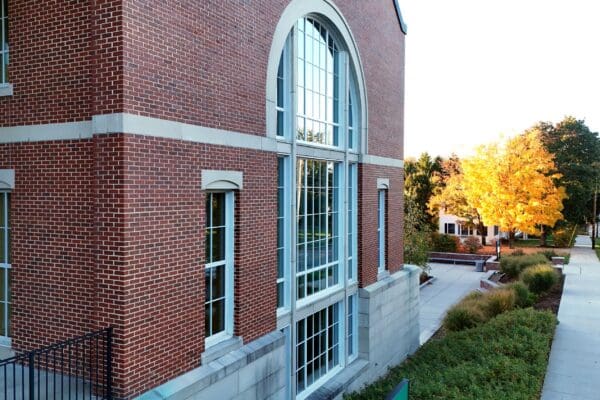
Close-up exterior of a Nichols College brick building with a large arched window, with a vibrant yellow fall foliage tree visible along the campus sidewalk

Sample courses:

Early American Literature

Starting before the United States existed; this course looks at the written and oral literature that defined America, from the time only Native Americans lived here through the middle of the Nineteenth Century. We will read the stories of slaves and settlers, Native Americans and newcomers, revolutionaries and artists. Included will be such authors as Edgar Allan Poe, Ralph Waldo Emerson, Henry David Thoreau and Walt Whitman.

Fiction Writing

Muriel Rukeyser once wrote, “The universe is made of stories, not atoms.” Fiction Writing centers on making our own universes through the creation of story and on the discovery of the universe within each of us, the stories of which we are made. Through discussion and revision of their own work as well as the reading of published pieces, class members find their own voices, hone their skills and release the energy of their own creative ­expression.

Sports Writing

Using the sports programs at Nichols as well as issues and events in the larger sports world, students will develop the writing skills of bona fide sports writers. The course will involve reporting on actual sports events, writing feature stories about athletes and their sports, and composing columns that combine good research with thoughtful opinion. Along the way, students will learn planning and interviewing skills and reinforce the foundations taught in their first-year writing courses.

English Minor Requirements

A student pursuing a minor in English must complete four courses having an ENGL prefix. The student must submit a Declaration of Minor form, available online through the Registrar's page on the Nichols HUB.

Required Courses

Choose any four courses from those listed below, two of which may have a course number of 200:

This introductory writing course is designed to build writing skills and to increase students' enjoyment of writing through extensive practice. The course focuses on teaching students to discover and develop ideas they wish to communicate, and then on the numerous technical skills necessary to make communication effective and engaging. Students will develop their voices, their styles, and their mechanics through multiple writing projects and through a focus on revision. Readings will illustrate the styles and organizational patterns of effective student and professional writers. Students who take this course cannot also take ENGL 112 Analytical Writing.

In this writing course, students will study and practice critical writing. As students read, write, and discuss such important cultural issues as technological developments, media's impact on society, identity formation, and environmental concerns, they will develop their own perspectives. Students will learn the purposes, strategies, and conventions of academic writing, particularly analysis and argumentation, through critical reading, drafting, and collaboration. Students who take this course cannot also take ENGL 105 College Writing. (Previously ENGL 212)

An introduction to the study of literature, the course will look at fiction, poetry and drama in a seminar format. In a discussion-intensive, reading-intensive course, students will look at a variety of books, built around a theme or a way of thinking about literature.

This course focuses on study of literature through examination of the work of people bound together by their ethnicity, culture, or identity. It will look at a single subject from year to year. Among the possible subjects are: Women's Literature, African-American Literature, Hispanic Literature, Asian, African or Latin-American Literature. Students may take and receive credit for this course additional times when different subjects are offered.

Students will examine a range of classical and medieval myths, legends, and folklore that explore the relationship between individual identity and the wider society. Students will learn about the historical and cultural context in which these texts were composed, and how literature both reflects and challenges ideology. Students will be expected to analyze literature's relevance and contributions in not only its own time period, but also to our culture today.

This course is an introduction to a period that produced many of the enduring classics of literature. It focuses on work from Europe, with some Asian and Middle Eastern material rounding it out. We will read Rationalists, Romantics, and Victorians and we will explore their stories and their ideas and how those fit or contrast with ours today.

300 and 400 level courses

This course looks at literature from before 1870 that focuses on a particular theme. Each semester will be different, but some themes could include the search for identity, good and evil, love and sex, crime, and more.

This course looks at literature from after 1870 that focuses on a particular theme. Each semester will be different, but some themes could include the search for identity, good and evil, love and sex, crime, sports, business, and more.

Across the continents, themes like love, becoming an adult, and death are universal. Other topics are unique to just some countries and cultures. As globalization makes today's world smaller and smaller, this course will look at contemporary world literature to explore the ideas that join us and those that still drive us apart. (We will read selected works from the 20th and 21st centuries.)

Starting before the United States existed; this course looks at the written and oral literature that defined America, from the time only Native Americans lived here through the middle of the Nineteenth Century. We will read the stories of slaves and settlers, Native Americans and newcomers, revolutionaries and artists. Included will be such authors as Edgar Allan Poe, Ralph Waldo Emerson, Henry David Thoreau, and Walt Whitman.

Muriel Rukeyser once wrote, "The universe is made of stories, not atoms." Fiction Writing centers on making our own universes through the creation of story and on the discovery of the universe within each of us, the stories of which we are made. Through discussion and revision of their own work as well as the reading of published pieces, class members find their own voices, hone their skills, and release the energy of their own creative ­expression.

From Greece in 300BC to Broadway today, playwrights have taken on the daunting task of creating a slice of human drama that can be performed in (usually) three hours or less. We will read and watch a variety of plays to see how writers have created characters, wars, heavens, hells, pasts, and futures - and brought them to life on a tiny stage in front of a live audience. From classic to cutting edge, the themes of heroism, pride, sex, love, war, and the range of human experience are brought to life in every scene.

This course will focus on both writing and reading/analyzing poetry, with the end goal of becoming more capable and attuned poets. Through discussing and revising your own work, as well as reading published pieces, you will find your own voices, hone your skills, and release the energy of your own creative expression. Approximately half of our classes will be spent discussing the works of established poets, both new and old, and the other half of our classes will be spent discussing your own poems. The structure of this course focuses not only on writing poetry, but also on the revision and analysis of poetry. You will spend ample time revising your work because all writing, including poetry, is ten percent writing and 90 percent rewriting. Moreover, there will be an emphasis on the reading and analysis of published poems because reading is as important as writing when trying to create great poetry- especially because the language of poetry is so different than our everyday language.

Using the sports programs at Nichols as well as issues and events in the larger sports world, students will develop the writing skills of bona fide sports writers. The course will involve reporting on actual sports events, writing feature stories about athletes and their sports, and composing columns that combine good research with thoughtful opinion. Along the way, students will learn planning and interviewing skills and reinforce the foundations taught in their first-year writing courses.

This is a writing workshop course in which students will explore their own experiences and ideas while learning how to effectively share those ideas with readers. The course will focus on writing experiences including autobiography, profiles of others, creative literary non-fiction, and pieces that relate to world events and the society and culture around us. In addition to extensive writing, students will read model essays.

Designed for students interested in journalism and those who want to improve their written communication skills. Intensive hands-on work in various aspects of news writing combined with analysis of the influence of media's role in the world.

Muriel Rukeyser once wrote, "The universe is made of stories, not of atoms." This course will explore the genre of science-fiction emphasizing both creative and analytical writing. Exploring the sci-fi genre in literature, film, TV, and music, we will discuss themes of time travel, parallel universes, and the outer limits of science and technology, among other things. We will read, view, and discuss sci-fi and other forms of the supernatural in order to critically explore the human condition. Through discussion and revision of your own work, you will find your own voices, hone your skills, and release the energy of your own creative expression.

This course is offered on an occasional basis and addresses topics and themes of special interest not covered in the standard course offerings in English.

This course is offered on an occasional basis and addresses topics and themes of special interest not covered in the standard course offerings in English.

Students will complete an internship in order to explore opportunities in publishing, journalism, marketing, communications, education, and a variety of other fields which welcome English majors' skills.

No description available.

No description available.

No description available.

Ready to Strengthen Your Professional Voice?

The English minor at Nichols College in Dudley, MA, develops communication abilities that set you apart in any career. Contact your academic advisor to learn more about adding this versatile minor to your academic plan. To learn more about Nichols, check out upcoming visit opportunities or contact our admissions team.