BSBA in Sport Management

at Nichols College

Sports are more than what happens on the field—they’re a global business. You can transform your passion for athletics into an enterprising career with a sport management degree (BSBA) from Nichols College.

Whether you aspire to work with professional teams, college athletics or major event venues, our program provides the expertise and connections needed to secure leadership roles in this vibrant industry.

Our COSMA-accredited sport management program and experienced faculty prepares future leaders for a competitive industry, with coursework in sport governance, facility and event management, athletics administration, and sponsorship and sales. Every student goes through at least one internship, supported by our strong industry connections.

Close-up exterior of a Nichols College brick building with a large arched window, with a vibrant yellow fall foliage tree visible along the campus sidewalk

Why Study Sport Management at Nichols College?

Pursuing a sports management degree at Nichols College means joining a program designed to make you a leader in the competitive sports industry. Here's what sets our program apart:

COSMA Accreditation

Study in a program with specialized accreditation through the Commission on Sport Management Accreditation, which ensures our program meets the highest industry standards for sport management education

Hands-On Learning

Put your learning into practice in unique opportunities, from our Super Bowl Practicum, where you attend the big game and serve as a fan experience intern, to experiential offerings in performance analysis, coaching, sales, video production and weight training

Expert Advisory Board

Derive value from our program’s dedicated advisory board of alumni and industry professionals—from places like the Boston Celtics to Boston College and other organizations—who offer networking connections and current real-world insights for you, and for our curriculum

Strong Industry Connections

Build invaluable professional networks by tapping into prestigious organizations—Nichols students have interned at places like Madison Square Garden, New York Rangers, Boston Red Sox and New York Knicks—and an alumni network that's 16,000+ members strong

Worcester County Location

Benefit from strategic access to New England's thriving sports industry and professional athletics corridor while getting the personal attention of a close-knit campus community

Plus, our program is AACSB-accredited—only six percent of institutions worldwide are accredited by the prestigious Association to Advance Collegiate Schools of Business.

Experiential Learning at Nichols College

Hands-on, experiential learning is a key component of a Nichols education. Every business student completes an internship, a professional certification and a research, experiential or consulting project before they graduate. Add holistic professional development to that hands-on foundation, and you get real results—95% of recent graduates secured jobs or entered graduate school within six months. All from a college ranked top 10 nationally among undergraduate business schools for mid-career salary potential and best value.
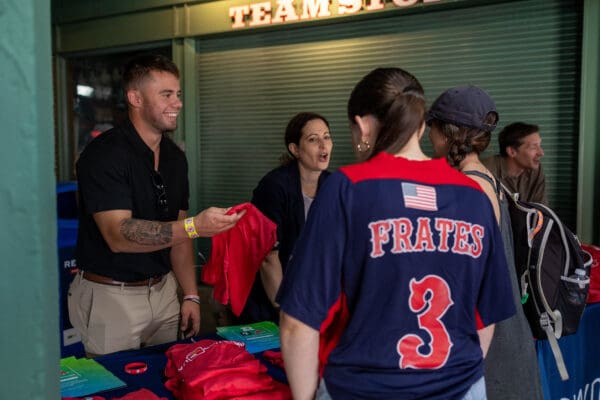
A Nichols College student intern assists with an event at historic Fenway Park in Boston.

Student-Faculty Projects

From assisting with faculty research and teaching to working on an advanced project with your professor, there are many ways to extend your learning beyond the classroom at Nichols.

Student-Run Opportunities

Whether you’re managing the Thunder Fund, working with Bison Consulting clients, helping run the Nichols Dudley Hill Golf Course Club and Bison Den or pitching ideas to companies, you’ll build career-ready skills.

Holistic Professional Development

Build confidence and vital soft skills through experiences that take you into the community, paired with public speaking practice, networking etiquette and signature leadership development.

Study Abroad

Take your education global through faculty-led trips, international internships, semester abroad programs and short-term travel that let you earn Nichols credits while expanding your worldview.

Careers in Sport Management

Sport professionals work in a competitive industry where the right skills can open doors across all levels of amateur, collegiate and professional sports. A degree in sports management prepares graduates to make an immediate impact in diverse roles spanning finance, marketing, leadership, facility management and event coordination.

Career possibilities include:

  • Sports marketing manager
  • Athletic director
  • Coach
  • Facilities and events coordinator
  • Public relations manager
And More
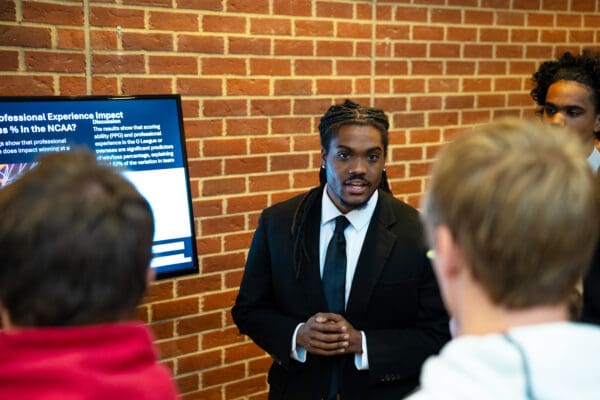
Two Nichols College students in professional attire laughing together at a career and internship fair booth

Meet Your Faculty

David Hodge

Chair, Sport Management 508-213-2148

Brian Wendry

Associate Professor of Sport Management 508-213-2052

Tim Liptrap

Chair, Entrepreneurship 508-213-2262

Christopher Streeter

Assistant Professor of Sport Management 508-213-2167

Shelby Masse

Assistant Professor of Sport Management 508-213-2343
FAQ

Frequently Asked Questions About Our Sport Management Program

What makes the Nichols sport management program unique compared to other programs?

Our sport management degree program at Nichols College holds COSMA accreditation, ensuring it meets the highest industry standards for sport management education. Our Industry Advisory Board, led by professionals from the Boston Celtics, Boston College and other major organizations, provides current industry insights and networking opportunities. Students complete professional internships annually with prestigious organizations like Madison Square Garden and the Boston Red Sox.

What is COSMA accreditation and why is it important for sport management students?

COSMA (Commission on Sport Management Accreditation) is the specialized accrediting body for sport management programs, ensuring our curriculum meets rigorous industry standards and prepares students for professional success. This accreditation is recognized by employers and graduate programs, giving our graduates credibility and competitive advantage in the job market and continuing education programs.

What extracurricular opportunities are available for sport management students?

The Sport Management Club offers specialized opportunities for sport management students, including networking with guest speakers from the sports industry, educational trips to athletic organizations and exposure to the diverse career opportunities within the sports business field.
Additionally, high-achieving students may be eligible for membership in Chi Sigma Mu, the official Honors Society for the Commission on Sport Management Accreditation (COSMA). This prestigious organization is open to bachelor’s, master’s and doctoral degree students who demonstrate academic excellence in their coursework and receive a faculty nomination. Membership in Chi Sigma Mu recognizes outstanding scholarly achievement in sport management and provides additional networking and leadership opportunities.

Sport Management Courses

Required Courses

This introductory-level course provides an overview to the structure of the sport industry and highlights the scope and variety of potential career opportunities. The value of professional management to sport organizations will also be emphasized. Attention will be given to the issues facing sport organizations and the use of management techniques to solve business-related problems. The development of effective communication skills and networking skills will be stressed through class presentations and projects and assignments.

This course examines the role of sports in North American culture and in a global context. The pervasiveness of sport in all areas of society will be investigated from a sociological perspective. Analysis of current issues impacting informal, organized, and professional sport will be considered. Attention will also be given to common characteristics within sport and society, including societal values and sport, social problems and sport, deviance, violence, politics, religion, the economy, mass media, ethnicity, nationality, and others. (Previously SMGT 352)

This course is designed to provide hands-on, practical involvement with a major sport event. Students will be assigned to committees for which they will plan, organize, publicize and manage all aspects of event operations during the semester. A required component of the course will include a commitment to work the actual event.

This course is designed to introduce the students to the role of effective communication in the sport industry. The nature and function of communication will be examined in a variety of settings. Emphasis will be placed on interpersonal communications, public relations, mass media relations, public speaking, and innovative technology. This class is designated as a writing intensive course.

The sport management seminar is designed as a capstone course and provides an overview of the current and critical issues faced by sport organizations. Emphasis will be placed on the issues confronting sport managers as they operate businesses while also presenting the students with an understanding of the basic tenets of sport policy and governance. The course will use case studies to explore and analyze current issues and concepts from earlier coursework in the field. A senior thesis, focusing on the student's area of interest, is required. Students will be guided through the process of designing individual works, conducting tests/measurements, and analysis and interpretation of results. The seminar is designed and recognized as an intensive writing course. Also, successful completion of the Sport Management Comprehensive Exit Exam is required to pass the course.

Practical Experience Requirement

Six credit hours of experiential learning are required for the Sport Management concentration. A minimum of three out of the six credit hours must be a SMGT internship course. Completion of the internship credit can be achieved through a combination from the following courses:

The internship requirement is considered to be one of the most critical components of the Sport Management Program. Students will undertake a 12-15 week, full-time (20 hours per week) supervised internship during the summer following the junior year, or during the fall or spring semesters of the senior year. This opportunity is expected to enhance the student's academic experiences via a required industry analysis paper, a research project, weekly logs and a portfolio, as well as provide additional work experience and networking opportunities. Internship experiences may take place in any of the varied sport industry settings. Students may obtain internship in any region of the country, abroad and in some cases may receive financial compensation.

or

The internship requirement is considered to be one of the most critical components of the Sport Management Program. Students will undertake a 12 - 15 week, full-time (10-15 hours per week) supervised internship during the summer following the junior year, or during the fall or spring semesters of the senior year. This opportunity is expected to enhance the student's academic experiences via a required industry analysis paper, a research project, weekly logs and a portfolio, as well as provide additional work experience and networking opportunities. Internship experiences may take place in any of the varied sport industry settings. Students may obtain internships in any region of the country and in some cases may receive financial compensation.

The practicum is designed to provide students with the opportunity to gain first hand experience in the business of sport. The course is structured to include weekly interaction and discussions with the professor which will focus on the student?s experiences and the practical application of management principles. Students are required to undertake 8 - 10 hours per week (throughout the semester) in an industry setting of their choice.

or

SMGT 490 and any SMGT practicum from the following list:

The internship requirement is considered to be one of the most critical components of the Sport Management Program. Students will undertake a 12 - 15 week, full-time (10-15 hours per week) supervised internship during the summer following the junior year, or during the fall or spring semesters of the senior year. This opportunity is expected to enhance the student's academic experiences via a required industry analysis paper, a research project, weekly logs and a portfolio, as well as provide additional work experience and networking opportunities. Internship experiences may take place in any of the varied sport industry settings. Students may obtain internships in any region of the country and in some cases may receive financial compensation.

This practicum combines classroom instruction and hands-on experience in the weight room. Students will be introduced to the basics of anatomy and physiology and learn the proper progressions of strength and conditioning, the purpose of training, adaptations, and how to coach a group through a training session. Students will also learn how to communicate with specific archetypes of athletes to effectively lead and coach a team. Students will receive an inside look at how coaching, leading, and building relationships under a foundation of knowledge creates successful sports performance coaches.

The practicum is designed to provide students with the opportunity to gain first hand experience in the business of sport. The course is structured to include weekly interaction and discussions with the professor which will focus on the student?s experiences and the practical application of management principles. Students are required to undertake 8 - 10 hours per week (throughout the semester) in an industry setting of their choice.

This course introduces students to the fundamental concepts and methods of performance analytics in the context of sport management. The course covers a range of techniques for analyzing athlete performance, team dynamics, and strategic decision-making using data analytics tools. Students will learn how to gather, interpret, and apply data to optimize performance and improve outcomes for athletes, teams, and organizations. By the end of the course, students will have hands-on experience with analytical tools, methods, and real-world case studies, assisting them with possible careers in sport performance analysis, coaching, and management.

The practicum is designed to provide students with the opportunity to gain firsthand experience in the business of sport (through coaching). The course is structured to include weekly interaction and discussions with the professor which will focus on the students' experiences and the practical application of coaching principles. Students are required to undertake 100 hours (8-10 hours per week) throughout the semester in an "assistant" coaching role with professor approval.

The practicum is designed to provide students with the opportunity to gain first hand experience in the business of sport. The course is structured to include weekly interaction and discussions with the professor which will focus on the student?s experiences and the practical application of management principles. Students are required to undertake 8 - 10 hours per week (throughout the semester) in an industry setting of their choice.

Sales is not about manipulating or pressuring clients, it's about active listening and building relationships with a wide variety of different people, and it's applicable to any professional endeavor and your personal life. According to the Work in Sports job board, over 50% of positions in the sport industry involve sales, and according to Jobs in Sports, becoming a sales assistant is an ideal entry-level sports job. This practicum will provide the experience needed to understand and become successful in sales.

The practicum is designed to provide students with the opportunity to gain first hand experience in the business of sport. The course is structured to include weekly interaction and discussions with the professor which will focus on the student?s experiences and the practical application of management principles. Students are required to undertake 8 - 10 hours per week (throughout the semester) in an industry setting of their choice.

The practicum is designed to provide students with the opportunity to gain first hand experience in the business of sport. The course is structured to include weekly interaction and discussions with the professor which will focus on the student?s experiences and the practical application of management principles. Students are required to undertake 8 - 10 hours per week (throughout the semester) in an industry setting of their choice.

This practicum focuses on creating written and video content on Nichols College club and varsity sports teams, including hype videos, interviews, day-in-the-life videos, and a weekly Sports Center-type recap.

or

SMGT 490 and a Teaching Associate Internship (TAI) or Research Associate Internship (RAI):

The internship requirement is considered to be one of the most critical components of the Sport Management Program. Students will undertake a 12 - 15 week, full-time (10-15 hours per week) supervised internship during the summer following the junior year, or during the fall or spring semesters of the senior year. This opportunity is expected to enhance the student's academic experiences via a required industry analysis paper, a research project, weekly logs and a portfolio, as well as provide additional work experience and networking opportunities. Internship experiences may take place in any of the varied sport industry settings. Students may obtain internships in any region of the country and in some cases may receive financial compensation.

No description available.

No description available.

Elective Courses

choose three from the following options:

This practicum combines classroom instruction and hands-on experience in the weight room. Students will be introduced to the basics of anatomy and physiology and learn the proper progressions of strength and conditioning, the purpose of training, adaptations, and how to coach a group through a training session. Students will also learn how to communicate with specific archetypes of athletes to effectively lead and coach a team. Students will receive an inside look at how coaching, leading, and building relationships under a foundation of knowledge creates successful sports performance coaches.

The practicum is designed to provide students with the opportunity to gain first hand experience in the business of sport. The course is structured to include weekly interaction and discussions with the professor which will focus on the student?s experiences and the practical application of management principles. Students are required to undertake 8 - 10 hours per week (throughout the semester) in an industry setting of their choice.

This course introduces students to the fundamental concepts and methods of performance analytics in the context of sport management. The course covers a range of techniques for analyzing athlete performance, team dynamics, and strategic decision-making using data analytics tools. Students will learn how to gather, interpret, and apply data to optimize performance and improve outcomes for athletes, teams, and organizations. By the end of the course, students will have hands-on experience with analytical tools, methods, and real-world case studies, assisting them with possible careers in sport performance analysis, coaching, and management.

The practicum is designed to provide students with the opportunity to gain firsthand experience in the business of sport (through coaching). The course is structured to include weekly interaction and discussions with the professor which will focus on the students' experiences and the practical application of coaching principles. Students are required to undertake 100 hours (8-10 hours per week) throughout the semester in an "assistant" coaching role with professor approval.

The practicum is designed to provide students with the opportunity to gain first hand experience in the business of sport. The course is structured to include weekly interaction and discussions with the professor which will focus on the student?s experiences and the practical application of management principles. Students are required to undertake 8 - 10 hours per week (throughout the semester) in an industry setting of their choice.

Sales is not about manipulating or pressuring clients, it's about active listening and building relationships with a wide variety of different people, and it's applicable to any professional endeavor and your personal life. According to the Work in Sports job board, over 50% of positions in the sport industry involve sales, and according to Jobs in Sports, becoming a sales assistant is an ideal entry-level sports job. This practicum will provide the experience needed to understand and become successful in sales.

The practicum is designed to provide students with the opportunity to gain first hand experience in the business of sport. The course is structured to include weekly interaction and discussions with the professor which will focus on the student?s experiences and the practical application of management principles. Students are required to undertake 8 - 10 hours per week (throughout the semester) in an industry setting of their choice.

The practicum is designed to provide students with the opportunity to gain first hand experience in the business of sport. The course is structured to include weekly interaction and discussions with the professor which will focus on the student?s experiences and the practical application of management principles. Students are required to undertake 8 - 10 hours per week (throughout the semester) in an industry setting of their choice.

This practicum focuses on creating written and video content on Nichols College club and varsity sports teams, including hype videos, interviews, day-in-the-life videos, and a weekly Sports Center-type recap.

This course is offered on an occasional basis and addresses topics and themes of special interest not covered in the standard course offerings in sport management.

This course is designed to offer hands-on, practical experience in creating and implementing a sponsorship and sales plan. Groups will create marketing surveys, develop sponsorship proposals, identify and contact potential buyers, conduct negotiation and sales, learn activation techniques, and evaluate sponsor packages.

This course will discuss the theory, development, and application of analytics in sport. Topics covered include player performance, player management, sports data strategies, team management, and game day operations and strategies. Extensive use of statistical software will be expected.

This course is offered on an occasional basis and addresses topics and themes of special interest not covered in the standard course offerings in sport management.

Free Electives

6 credit-hours of electives

Interested in Learning More?

Join us at one of our upcoming campus events in Dudley, MA, or schedule a campus visit. You can also contact our Admissions team to discuss your academic goals and how Nichols can help you reach them.