
A Nichols College marketing student looks at the camera with a "peace sign" hand signal at a wooden conference table with a group of other students.

BSBA in Marketing

at Nichols College

Marketing can turn ideas into results for organizations, but only when innovative thinking drives the process. Build your career as a creative problem-solver and strategic communicator with a marketing degree (BSBA) from Nichols College.

Our business marketing degree is designed for students passionate about generating and effectively communicating innovative marketing solutions.

Our marketing program employs experiential learning approaches to develop and apply data analysis, planning, digital communication, selling leadership and decision-making skills. By combining theoretical foundations with hands-on experience, you’ll be prepared with the skills needed to capture market attention, build demand and drive product success in today’s rapidly evolving global marketplace.

Close-up exterior of a Nichols College brick building with a large arched window, with a vibrant yellow fall foliage tree visible along the campus sidewalk

Why Study Marketing at Nichols College?

Pursuing a marketing degree at Nichols means joining a program that creates innovative, effective marketers who make things happen in competitive markets. Here's what sets our program apart:

Experienced Faculty

Learn from professors with direct expertise in marketing, advertising and PR industries as well as digital marketing

Hands-On Learning

Gain relevant skills with multiple team-based consulting projects, working with established organizations to solve real-world marketing challenges

Industry Certifications

Earn recognized credentials in marketing disciplines

Professional Connections

Engage with professionals and secure meaningful internships through our career contacts, hands-on employer experiences and alumni network that's 16,000+ members strong

Worcester County Location

Benefit from strategic access to New England's vibrant marketing industry and consumer markets while getting the personal attention of a close-knit campus community

Plus, our program is AACSB-accredited—only six percent of institutions worldwide are accredited by the prestigious Association to Advance Collegiate Schools of Business.

Experiential Learning at Nichols College

Hands-on, experiential learning is a key component of a Nichols education. Every business student completes an internship, a professional certification and a research, experiential or consulting project before they graduate. Add holistic professional development to that hands-on foundation, and you get real results—95% of recent graduates secured jobs or entered graduate school within six months. All from a college ranked top 10 nationally among undergraduate business schools for mid-career salary potential and best value.
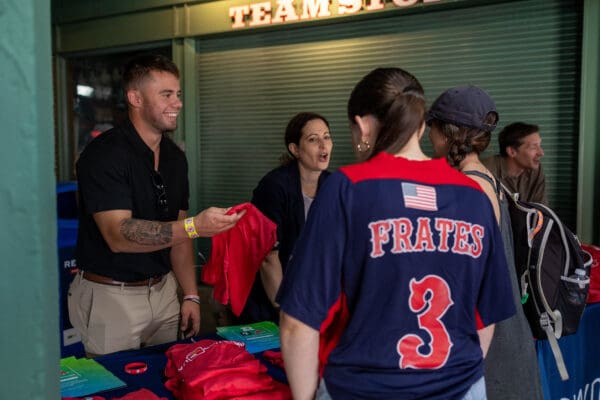
A Nichols College student intern assists with an event at historic Fenway Park in Boston.

Student-Faculty Projects

From assisting with faculty research and teaching to working on an advanced project with your professor, there are many ways to extend your learning beyond the classroom at Nichols.

Student-Run Opportunities

Whether you’re managing the Thunder Fund, working with Bison Consulting clients, helping run the Nichols Dudley Hill Golf Course Club and Bison Den or pitching ideas to companies, you’ll build career-ready skills.

Holistic Professional Development

Build confidence and vital soft skills through experiences that take you into the community, paired with public speaking practice, networking etiquette and signature leadership development.

Study Abroad

Take your education global through faculty-led trips, international internships, semester abroad programs and short-term travel that let you earn Nichols credits while expanding your worldview.

Careers in Marketing

A degree in marketing develops expertise in understanding audiences, building brands and communicating value, along with transferable skills in strategy, analysis and creative problem-solving. Graduates can pursue roles across business, media, technology, nonprofits and consumer-focused industries, among other sectors.

Career possibilities include:

  • Account manager
  • Regional sales manager
  • Marketing analyst
  • Digital marketing specialist
  • Product manager
And More
Two Nichols College students in professional attire laughing together at a career and internship fair booth

Meet Your Faculty

Tuba Bingol

Assistant Professor of Marketing 508-213-2253

Funda Sarican

Assistant Professor of Marketing 508-213-2263

Jean Beaupre

Dean for the School of Business 508-213-2161

Len Harmon

Associate Professor of Marketing 508-213-2164

Bill Moylan

Adjunct Professor 508-213-2247

Ashley O'Keefe

Adjunct Undergraduate Faculty
FAQ

Frequently Asked Questions About Our Marketing Program

What can you do with a marketing degree from Nichols College?

A marketing degree from Nichols College in Dudley, MA, opens doors to diverse career paths across all industries. Our graduates work as account managers, digital marketing specialists, product managers, brand strategists and social media managers. The comprehensive skill set developed through our program—creative problem-solving, strategic communication, data analysis and brand management—prepares students for leadership roles in any organization that needs to connect with customers. With marketing being essential to every business regardless of size or purpose, graduates find opportunities in healthcare, technology, manufacturing, retail, nonprofits and emerging industries.

How does the marketing program at Nichols College provide real-world experience?

Our marketing degree emphasizes hands-on learning through extensive consulting projects, with 109 students participating in 18 real consulting projects in 2024. Students work directly with organizations to solve real-life marketing challenges, from developing brand strategies to implementing digital campaigns. Graduates enter the workforce with proven skills and tangible accomplishments that set them apart from other candidates.

Does Nichols College offer the opportunity to minor in complementary subjects with the BSBA in marketing program?

Almost all of our exciting BSBA and BA programs are available as a minor, making it easy for you to expand on your degree with coursework that builds on your passion and rounds out your skillset. Strong minor options for a marketing major include psychology[link] (to understand consumer behavior), communication[link] (for content and PR) and international business [link] (for global markets).

Marketing Courses

Required Courses

This course includes a survey of basic theories of the human communication process, and an examination of communication in the following contexts: (1) interpersonal communication, (2) inter/intra cultural communications, (3) group communication, (4) mass communication, and (5) organizational communication.

Examination of the consumer marketing process. This includes analysis and planning of consumer marketing programs with investigation of consumer decision making and buying patterns. Includes written case analyses and presentations.

A study of the application of research techniques in market analysis. Student teams design, conduct, and present a research project, including problem definition, questionnaire design, data collection, data analysis, documentation, and recommendation.

A capstone course that focuses on the integration of marketing with the other functional areas of business. This course examines the marketing strategy formulation process through the development of analytical techniques to assess company, market, and industry. Utilizes extensive case analysis/and or consulting project.

Elective Courses

This advanced communication course will cover the theories of organizational communication, the role of communication in organizations, communicating with and between key stakeholders such as employees and management, conflict and negotiation, and ethical communication. Students will analyze real cases and propose and debate alternative solutions.

This course will introduce students to the art of persuasion - how to influence others through the medium of reasoned, ethical discourse. Via study, discussion, and practice, students will learn the behaviors of persuasive communicators, including how to effectively engage in analysis, develop sound research techniques, and rigorously evaluate data and information. In addition to oral assignments and activities, they will write argumentative essays as a means of developing, organizing, and expressing their ideas clearly and concisely. Students will learn to employ logical, emotional, and ethical appeals, and should emerge from the course as stronger critical thinkers who engage in socially responsible rhetoric.

Storytelling is an important part of communication in all different mediums - social media, advertising/marketing, film, television, music, and books. Given that we create and deliver stories in all aspects of our lives, this course will examine the structure of stories, the best practices for gathering and telling stories, and the process for effectively delivering stories. Students will learn to both interpret/analyze storytelling and create stories in a variety of forms: written, oral, and visual.

This course is designed to give students a comprehensive understanding of the principles and practices of operating a Visual Media Studio and creating branded content for social media marketing. Students will learn how to operate the facility and its equipment while developing and implementing effective branding strategies and creating compelling digital content. The course will also cover the various media formats, including video, image, and audio, and how to optimize them for their client's different social media platforms. By the end of the course, students will have the skills to operate a studio, create and execute successful social media campaigns, and understand the importance of branding and content creation in today's digital landscape.

This course will examine the relationship of understanding the role of the self in understanding others who may hold differing values. This is a vital component since, according to the researcher and writer James Neuliep, "culture teaches us how to think, conditions one how to feel, and instructs one how to act, especially how to interact with others." In other words, our understanding of ourselves and how we become that way helps us to understand others and how they became the way they are. We need to establish the idea in our consciousness that our understanding of how important our essence, our cultural identity, is to us, is equally important to people from other cultures' understanding of themselves. By moving to this understanding of difference, we gain a stronger sense of how important it is to find ways to be productive with others. With current markets being so globally focused, and people coming to the US from other places, it is quite likely that professionals will need to have this ability as global markets continue to shrink.

Industry's appetite for intelligent automation solutions grows as stakeholders recognize the power and value to these impressive tools. However, solution identification and deployment is not a simple matter. The appropriate analysis must be performed to identify the opportunity, document the process and data environment, craft the business solution and build a plan that minimizes risks. Historically, 50% of technology projects fail because this critical step is rushed, skipped or done badly. Students will learn the fundamentals of business analysis in the course from an industry best practice framework. By the end of class, students will have used key aspects of the framework and completed foundational business analysis templates.

Analytics is the process of getting value out of data. It explains how seemingly mundane data points, when combined, can provide insights into habits, processes, and patterns. We live in a world overflowing with data, and only recently has technology reached the point where anyone can conduct this type of analysis without the aid of supercomputers or consulting firms. This course covers "D2D", or Data to Decisions. Specifically, this means we will learn what to collect, how to collect it, and how to transform it into actionable information. It is also focused on solving real business problems, which is the most practical application for Nichols business students.

This hands-on course covers the art and science of data visualization. It explores various visualization techniques and the way that shape, size, color, orientation, and motion influence the way information is comprehended. The class will use world-class visualization platforms such as Tableau and PowerBI. Students will understand the difference between exploratory versus explanatory visualization as well as gain an appreciation for the appropriate use of visualization techniques. We'll discuss how visualizations can be manipulated to mislead or misinform others and discuss the ethics around data visualization. Students will work through a series of interactive dashboards culminating with the final project in which the student will create a story with their data.

An analysis of the international business and consumer environments and the development and implementation of marketing programs across business alternatives (e.g., direct investment, joint ventures, licensing). Topics include the roles of cultural, political, technological, economic, and legal aspects of marketing in an international environment, as well as how these affect the marketing mixes likely to be successful in various international markets. (Previously MKCM 434)

Negotiation is a critical skill in business and in life - whether it is for salary, contracts, resource allocation, or collective decision making. Knowing how to effectively and ethically negotiate is essential for leadership and for accomplishing individual and group objectives. In this course, students will learn the strategy, structure, and skills of negotiation in interpersonal and organizational contexts.

Public Relations (PR) is a management and marketing function that identifies, establishes, and maintains effective relationships between an organization and the audiences it services. PR used to be all about mass media, but social media has changed that. It is still about building and maintaining effective relationships, but PR is now also about having a direct conversation with your audience using paid, earned, shared, and owned channels. In this course, we will examine the strategic purpose and tactical practices of PR, including the identification of publics, planning, writing/content creation, ethical considerations, and evaluation.

Social media is constantly changing, and brands must develop, evaluate, and adapt their strategies. Building effective social media strategies enables marketers to leverage unique and original content to build their brand communities. Students will learn different software and create a comprehensive approach to create and execute social media strategy. This course will also offer students the opportunity to understand and analyze changing social media trends.

An examination of the process of marketing to business, institutional, and governmental markets. The course focuses on business buyers and the development of marketing strategies for business goods and services.

The internet is a dynamic marketplace if there ever was one. This class will give you the theoretical understanding of the Internet marketplace necessary to adapt to its many changes, while also equipping you with the skills you'll need to perform vital daily functions. By the end of the course, you will be able to walk into any company with an online presence and improve their use of the internet. The course includes discussions of both B2B and B2C and looks at marketing and communications from an integrated, business-wide perspective. The goal is to appreciate principles and practice of online marketing. The classroom sessions are a combination of lectures, discussions, and experiential learning. To ensure effective utilization of lecture time and the time of your classmates, you are required to read the materials before they are covered in class.

This course is offered on an occasional basis and addresses topics and themes of special interest not covered in the standard course offerings of Management.

A course focusing on advertising, sales promotion, and direct marketing also known as integrated marketing communications. Topics include planning and execution of promotional programs, strategy development, and segmenting and positioning. Orientation reflects the managerial or "client" side of business rather than the "creative" or message development side.

An investigation of the functions and activities of sales managers. Topics include recruiting, organizing, training, compensating, leading, motivating, and managing the sales force.

This course examines in depth a major issue, problem, or theme in the area of marketing and communication. It includes a specialized research paper or project, involves discussion and oral and written reports, and may include guest speakers and field trips.

An internship serves as an integral part of our experiential learning emphasis for students selecting the Marketing concentration. The objective of the course is to gain work experience in a marketing and/or communication related field or position. Students may select an internship based on their interests and preferences, and faculty and the Career & Professional Development Center are available to assist students in the internship search. Students are required to work 120 hours over the course of the semester and complete a comprehensive project upon completion of the internship.

491 The Research Associate is an option for select, motivated students to work under the close supervision of a faculty member, assisting in the faculty's current research project, or conducting their own study. Students are provided training in research, and develop new communication and critical thinking skills, and are introduced to the possible future opportunities in the research-related aspects of their field. The experience will enhance students' graduate and employment qualifications. To be eligible, students must have completed at least 60 hours of classroom instruction. Research Associates and other experiential learning opportunities require approval of the Program Chair.

A Teaching Associate Intern works with students in a specific course to provide support for the faculty member in charge. His/ her duties may include teaching; preparing instructional materials; critiquing student papers; tutoring students; aiding in online or classroom discussions; sample assignment preparation; and performing other duties as assigned. Major responsibility for a class shall not be given to a teaching associate intern. The associate works under the supervision of an experienced faculty member. In consultation with the supervisor, the teaching associate works to gain instructional skills and to enhance his/her grasp of the essentials of the academic discipline and the role and responsibilities of a faculty member. To be eligible, students must have completed at least 60 hours of classroom instruction (or receive approval by the appropriate faculty member or program chair), have earned a "B+" or better in the course they wish to assist, and have earned a cumulative GPA of 3.0. Teaching Associates and other experiential learning opportunities require approval of the Program Chair.

The Advanced Project is an opportunity for students to work with a group under the close supervision of a faculty member, developing professional skills and personal knowledge through an outside-the-classroom advanced project. Students develop new communication and critical thinking skills, as well as practice leadership and teamwork. They are introduced to new hands-on opportunities related to their field, and possible career opportunities. The experience will enhance students' graduate and employment qualifications. To be eligible, students must have completed at least 60 hours of classroom instruction. The Advanced Project and other experiential learning opportunities require approval of the Program Chair.

Free Electives

12 credit-hours of electives

Interested in Learning More?

Join us at one of our upcoming campus events in Dudley, MA, or schedule a campus visit. You can also contact our Admissions team to discuss your academic goals and how Nichols can help you reach them.