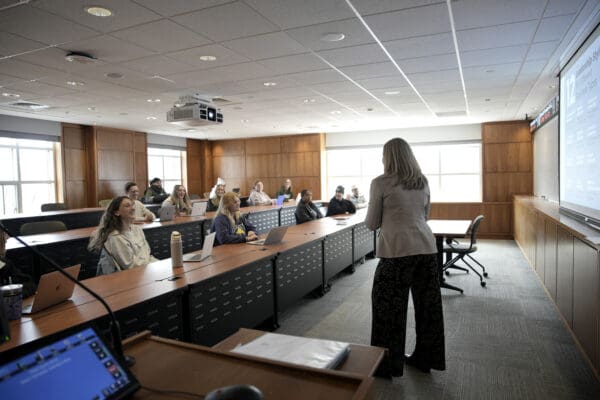
A professor leads a lecture for a class of engaged Nichols College students in a wood-paneled classroom, with a presentation projected on screen.

BSBA in Human Resource Management

at Nichols College

Every organization depends on people, and human resource professionals help those people thrive.

You can build your career as the bridge between organizations and their most valuable asset—their employees—with a human resource management degree from Nichols College in Dudley, MA.

Our comprehensive curriculum in human resource management prepares you to become a leader across diverse industries, from improving benefit packages for large corporations to recruiting top talent for growing businesses. Our program combines theoretical foundations with a hands-on approach that includes a required internship, ensuring you graduate with the skills needed to navigate complex workplace dynamics in today’s evolving business landscape.
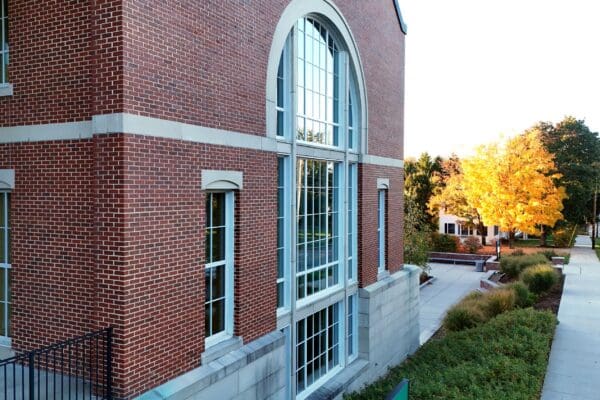
Close-up exterior of a Nichols College brick building with a large arched window, with a vibrant yellow fall foliage tree visible along the campus sidewalk

Why Study Human Resource Management at Nichols College?

Our human resource management degree program provides the comprehensive foundation needed to succeed in this fulfilling and essential business function. Here's what sets our program apart:

Career-Ready Focus

Specialized curriculum covering employee rights, compensation and benefits, performance management, global talent management and labor law compliance

Relevant Skills

Develop your ability to think creatively and constructively about various workplace issues through real-world based projects

Professional Connections

Engage with professionals and secure meaningful internships through our career contacts, hands-on employer experiences and alumni network that's 16,000+ members strong

Worcester County Location

Benefit from strategic access to organizations across New England’s thriving business community while getting the personal attention of a close-knit campus community

Plus, our program is AACSB-accredited—only six percent of institutions worldwide are accredited by the prestigious Association to Advance Collegiate Schools of Business.

Experiential Learning at Nichols College

Hands-on, experiential learning is a key component of a Nichols education. Every business student completes an internship, a professional certification and a research, experiential or consulting project before they graduate. Add holistic professional development to that hands-on foundation, and you get real results—95% of recent graduates secured jobs or entered graduate school within six months. All from a college ranked top 10 nationally among undergraduate business schools for mid-career salary potential and best value.
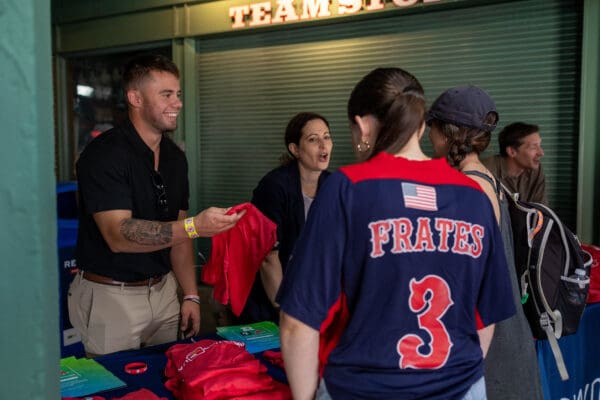
A Nichols College student intern assists with an event at historic Fenway Park in Boston.

Student-Faculty Projects

From assisting with faculty research and teaching to working on an advanced project with your professor, there are many ways to extend your learning beyond the classroom at Nichols.

Student-Run Opportunities

Whether you’re managing the Thunder Fund, working with Bison Consulting clients, helping run the Nichols Dudley Hill Golf Course Club and Bison Den or pitching ideas to companies, you’ll build career-ready skills.

Holistic Professional Development

Build confidence and vital soft skills through experiences that take you into the community, paired with public speaking practice, networking etiquette and signature leadership development.

Study Abroad

Take your education global through faculty-led trips, international internships, semester abroad programs and short-term travel that let you earn Nichols credits while expanding your worldview.

Careers in HR Management

Human resource management graduates enter the workforce as versatile professionals, equipped with the strong foundational knowledge and practical experience to succeed as recruiters, compensation directors, workforce coordinators and administrative supervisors across all industries.

Career possibilities include:

  • HR director
  • Director of training and development
  • Recruitment specialist
  • Senior HR manager
  • Director of compensation and benefits
And More
Two Nichols College students in professional attire laughing together at a career and internship fair booth

Meet Your Faculty

Kim Krumsiek

Chair, Human Resource Management 508-213-2174

Mary Trottier

Adjunct Professor 508-213-2125
FAQ

Frequently Asked Questions About Our HR Management Program

What career support does Nichols College provide for human resource management students?

Nichols College offers comprehensive career support including personalized career counseling, resume and interview preparation, networking events with human resource professionals and access to our extensive alumni network, with plenty of alumni residing here in Worcester County. Our career services team[link to career services page] works closely with human resource management students to identify internship opportunities and full-time positions, with many students receiving job offers through connections made during their internship experiences.

How does the human resource management program prepare students for professional certifications?

Our human resource management curriculum aligns with the knowledge areas tested in major professional certifications like PHR (Professional in Human Resources) and SHRM-CP (Society for Human Resource Management Certified Professional). Courses in employment law, compensation and benefits and organizational behavior provide the foundational knowledge needed for these certifications. Faculty members actively encourage certification pursuit and provide guidance on exam preparation, helping students advance their careers immediately upon graduation.

Human Resource Management Courses

Required Courses

This course introduces students to the fundamental practices involved in effective human resource management, such as recruiting, performance evaluation, compensation, employment law, and employee rights. HR theory and practice are emphasized within the context of improving organizational productivity and developing employee potential.

Today's organizations must compete globally and their most important asset for success is a highly competent and effective workforce. This course focuses on how top businesses attract, hire, and retain the best and the brightest talent while respecting and protecting civil and employment rights.

Hiring qualified talent is no guarantee that these employees will achieve their potential. Without nurturing, much of this talent will remain untapped and wasted. High performing workforces are the result of continuous development and effective motivational strategy. Based on sound motivational theory, this course examines why people work and what organizations should know and do to create winning teams.

This course examines the relationship between rewards and performance on the job. Students will learn about the issues that influence how organizations set pay and benefits policies including executive bonus and deferred compensation plans. They will also examine how compensation differs by job level and by job location and how these factors contribute to decisions regarding outsourcing and offshoring of jobs.

Virtually every US company now faces competition from abroad, and the fortunes of most US firms, large and small, are inextricably bound to the global economy. Company HR Departments must have a global perspective to remain competitive. And all managers, especially HR professionals, must develop a sensitivity to global issues and practices. This course will focus on several aspects of human resources in a global context: labor practices in developing countries; multinational companies' strategies in complying with international ethical principles; and how companies can manage global operations in a manner that results in a successful experience for both the employee and the firm.

And one experiential learning course from:

An intensive program of work experience with a business or corporation. Combines both experiential learning with traditional academic work through required term essay and presentation of internship results to an appropriate class. Internship course specifications and "learning contract" forms are available through the Office of Career Services. Students interested must be of junior or senior standing and have a 2.5 grade point average.

491 The Research Associate is an option for select, motivated students to work under the close supervision of a faculty member, assisting in the faculty's current research project, or conducting their own study. Students are provided training in research, and develop new communication and critical thinking skills, and are introduced to the possible future opportunities in the research-related aspects of their field. The experience will enhance students' graduate and employment qualifications. To be eligible, students must have completed at least 60 hours of classroom instruction. Research Associates and other experiential learning opportunities require approval of the Program Chair.

A Teaching Associate Intern works with students in a specific course to provide support for the faculty member in charge. His/ her duties may include teaching; preparing instructional materials; critiquing student papers; tutoring students; aiding in online or classroom discussions; sample assignment preparation; and performing other duties as assigned. Major responsibility for a class shall not be given to a teaching associate intern. The associate works under the supervision of an experienced faculty member. In consultation with the supervisor, the teaching associate works to gain instructional skills and to enhance his/her grasp of the essentials of the academic discipline and the role and responsibilities of a faculty member. To be eligible, students must have completed at least 60 hours of classroom instruction (or receive approval by the appropriate faculty member or program chair), have earned a "B+" or better in the course they wish to assist, and have earned a cumulative GPA of 3.0. Teaching Associates and other experiential learning opportunities require approval of the Program Chair.

No description available.

Elective Courses

choose one from the following options:

This advanced communication course will cover the theories of organizational communication, the role of communication in organizations, communicating with and between key stakeholders such as employees and management, conflict and negotiation, and ethical communication. Students will analyze real cases and propose and debate alternative solutions.

This course will delve into the unique characteristics of and challenges facing women in the workplace today. The biological and sociological theories of gender differences will be explored, as will gender-based communication and leadership styles. The current state of women in leadership around the world will be examined, with students completing a statistical research project. Students will examine and reflect on their own leadership and work styles, as well as practice professional skills of particular interest to women.

This course will examine the relationship of understanding the role of the self in understanding others who may hold differing values. This is a vital component since, according to the researcher and writer James Neuliep, "culture teaches us how to think, conditions one how to feel, and instructs one how to act, especially how to interact with others." In other words, our understanding of ourselves and how we become that way helps us to understand others and how they became the way they are. We need to establish the idea in our consciousness that our understanding of how important our essence, our cultural identity, is to us, is equally important to people from other cultures' understanding of themselves. By moving to this understanding of difference, we gain a stronger sense of how important it is to find ways to be productive with others. With current markets being so globally focused, and people coming to the US from other places, it is quite likely that professionals will need to have this ability as global markets continue to shrink.

This course is a senior level seminar concerning the historical role of labor in the American Economy. One of the major themes of the course will be the relationship between labor markets and political issues. We will be interested in the relatively stagnate wage growth of the last three (plus) decades and the rise of income inequality. Other topics of interest will be: (1) the role of Women in the US economy; (2) the issue of Race in shaping the historical development of capitalism in the US; and (3) the changing structure of labor in the Twentieth Century US American economy, and the rise of the "predator state." We will seek to better understand these trends and to explain them through history, modeling, and theoretical and political analysis.

This course introduces students to Gender and Diversity Studies, an interdisciplinary field of academic study. The course surveys contemporary gender issues, focusing on the social construction of race, sexuality, and gender and the relationship of gender to the self, others, and society. Along with the focus on the U.S., the course incorporates international perspectives on gender constructions and experiences. This course aims to connect our academic explorations with our lived experiences.

This course will examine the history of the Civil Rights Movement in America, from its origins in the years after the Civil War to the current Black Lives Matter movement. Students will learn how the development of the NAACP, the Great Migration and World War II helped ignite the protests of the 1950s and 1960s. Students will study numerous events related to the struggle for civil rights, including the murder of Emmett Till, school integration, student sit-ins, Martin Luther King, Jr. and Malcolm X. Students will complete a research project on a person or event related to the Civil Rights Movement.

No description available.

A Teaching Associate Intern works with students in a specific course to provide support for the faculty member in charge. His/ her duties may include teaching; preparing instructional materials; critiquing student papers; tutoring students; aiding in online or classroom discussions; sample assignment preparation; and performing other duties as assigned. Major responsibility for a class shall not be given to a teaching associate intern. The associate works under the supervision of an experienced faculty member. In consultation with the supervisor, the teaching associate works to gain instructional skills and to enhance his/her grasp of the essentials of the academic discipline and the role and responsibilities of a faculty member. To be eligible, students must have completed at least 60 hours of classroom instruction (or receive approval by the appropriate faculty member or program chair), have earned a "B+" or better in the course they wish to assist, and have earned a cumulative GPA of 3.0. Teaching Associates and other experiential learning opportunities require approval of the Program Chair.

No description available.

Examines management theory and practice as applied to business activities that cross national boundaries. Emphasis is placed on an understanding of strategic, cultural, behavioral, functional, legal, and socio-ethnical aspects of international management in a global economy with multinational business enterprises.

This course focuses on the strategies and tactics for conceiving, developing, initiating and managing innovation and change within an established corporate structure. Topics include attributes of corporate entrepreneurs, bases of creativity and innovation, interpersonal and interdepartmental relationships, promoting innovation and change within the corporate structure, organizational politics, strategic organizational changes, and corporate culture.

The course reviews human development from pregnancy and prenatal development through old age with a unique balance and depth of coverage across all age groups. We will examine the physical and intellectual changes humans undergo from conception through death. With an emphasis on modern cultural and societal issues ranging from homophobia to family violence, this course builds on the basic themes of life-span development.

This course examines the formation of groups, group processes, followership, and leadership processes within groups and group behaviors. Emphasis is placed on the experience of applying group theory.

This course reviews the major contemporary theories and techniques of counseling. Students have opportunities to observe counseling situations and to practice counseling techniques. Ethical and professional issues are also addressed.

An exploration of what it means to be "human" and a "sexual" being. This class is an opportunity to discuss and debate attitudes, research, and one's own perceptions of sexuality in order to understand those of others. This course will not only ensure that you acquire basic factual information about human sexuality, but also will give you opportunity to think about your own sexual values and behaviors. Topics such as the sexual response cycle, birth control, abortion, sexual morality, love and intimacy, sexual orientation, developmental changes in sexuality, sexual dysfunctions and disabilities, prostitution, pornography, and sexual violence will be discussed.

This course examines the factors impacting human relationships. Emphasis is placed on interpersonal attraction, attitude formation, social perception and cognition, altruism, aggression, small group behavior, and social identity and influence.

The major living religions of the world are studied as expressions of ultimate concern within their historical, theological, and social contexts. Both eastern and western religions are studied.

Regardless of your industry or role, communication skills are vital to success. The purpose may be persuasive, motivational, organizational, managerial, or interpersonal, and the method may be written or oral, but at its core, successful communication is both effective and efficient. Like other business skills, communication abilities can be studied and developed. This course will help students to understand the underpinnings of communication, and to develop skills necessary in the 21st century.

As business practices evolve to meet the changing demands of the marketplace, leaders must constantly evaluate and make adjustments to stay on top of the field. This course is designed to help students identify, evaluate, and analyze current trends and then to make judgments on the viability and wisdom of those trends.

Free Electives

15 credit-hours of electives

Interested in Learning More?

Join us at one of our upcoming campus events in Dudley, MA, or schedule a campus visit. You can also contact our Admissions team to discuss your academic goals and how Nichols can help you reach them.